Blog
Leave Shyness in the Practice Room, Bring Courage to the Classroom and Stage!
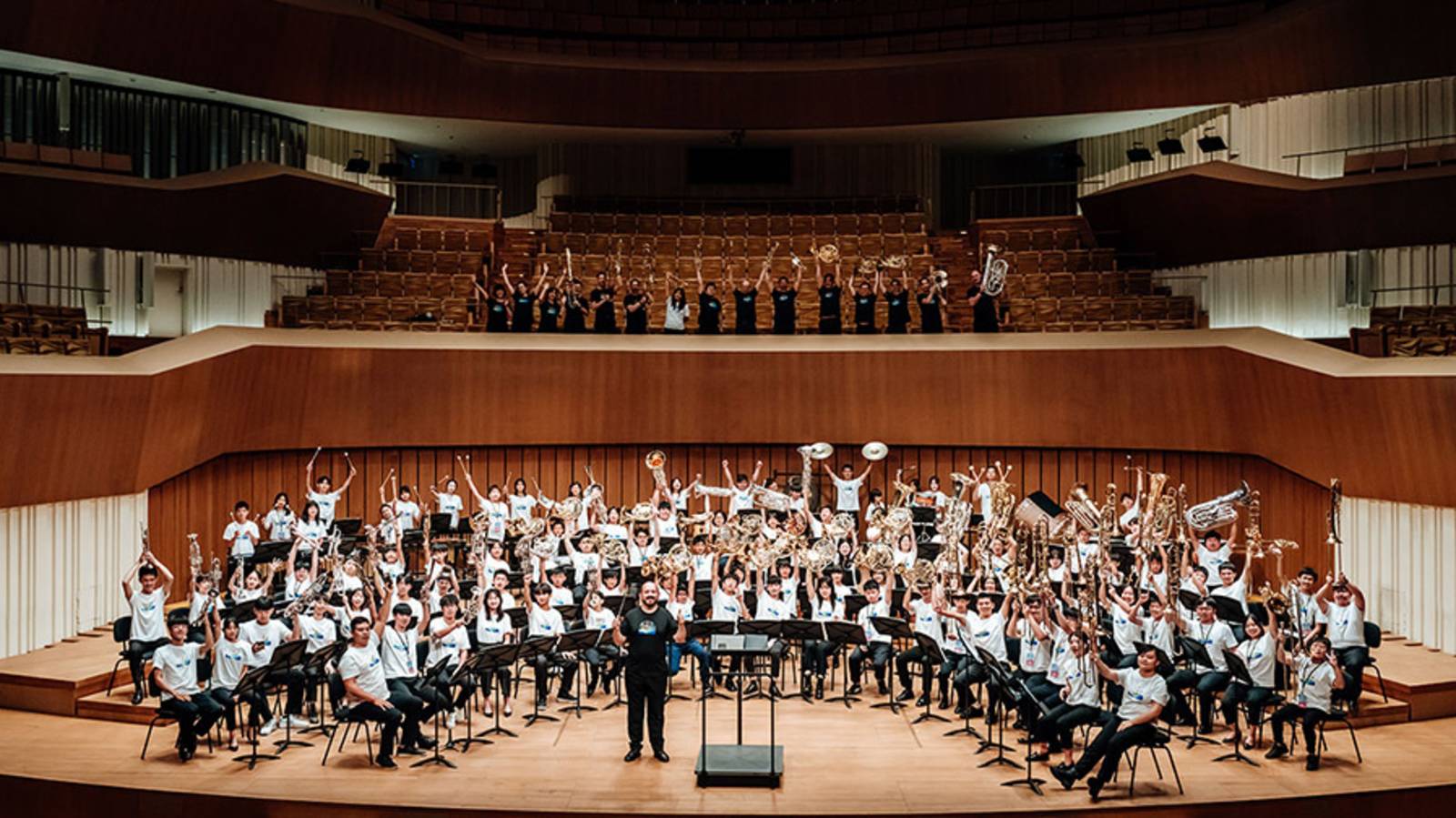
▲Main image: 2024 Eurocuivres Asia Showcase Concert(Photo courtesy of the National Kaohsiung Center for the Arts (Weiwuying))
Interview and Text by Stephanie Chen Translator|YANG Kai-xun
The 2026 Weiwuying Music Camp & Eurocuivres Asia will take place during the first week of summer vacation. For the first time, Eurocuivres Asia's courses and performances will include the Weiwuying Concert Hall pipe organ. Bringing together the "King of Instruments" with a large brass and percussion ensemble of almost 100 players will add new depth to the sound and give this year's camp a fresh educational angle.
Since its founding in 1999, Eurocuivres has focused on more than just training top performers. Instead, through intensive rehearsals and group performances, it encourages participants from diverse backgrounds to build mutual understanding and rediscover the collaborative nature of music-making. This year, adding the pipe organ brings new repertoire and performance possibilities for the ensembles. Brass, percussion, and the pipe organ all project powerfully in a concert hall, but each has its own way of producing sound and a unique tone. Blending them well takes careful coordination in breathing, rhythm, and dynamics from everyone involved.
The core of the music camp is the challenge of "listening" and "collaboration," emphasized throughout its courses and performances. In this interview, Weiwuying Artistic Director CHIEN Wen-pin talks about the educational philosophy behind the program, while organist LIU Hsin-hung, invited as Pipe Organ Technical Consultant, discusses the practical challenges of integrating the pipe organ with a brass and percussion ensemble of nearly 100 players.
A Connection Beyond Shared Industrial Roots
When talking about how Weiwuying brought Eurocuivres to Taiwan, many people naturally point out the similarities between Montbéliard, France, where Eurocuivres originated, and Kaohsiung, as both cities developed on the foundations of heavy industry and manufacturing. This shared background lend a romantic symbolism to their collaboration. However, Weiwuying Artistic Director CHIEN Wen-pin thinks the true connection lies in Taiwan's wind ensemble culture and the passionate, open attitude that the French musicians bring to making music together.
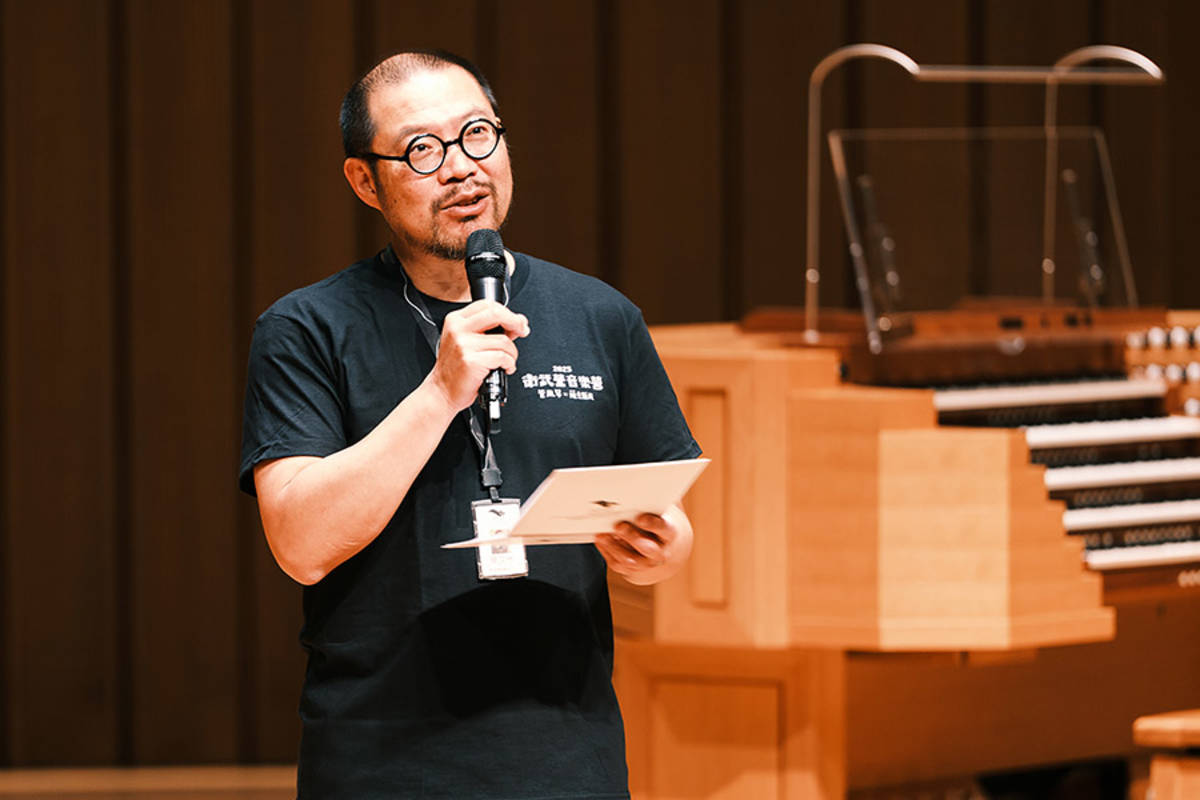 |
▲Artistic Director CHIEN Wen-pin delivering opening remarks at the 2025 Weiwuying Music Camp Pipe Organ & Saxophone(Photo courtesy of the National Kaohsiung Center for the Arts (Weiwuying))
"We observed that wind ensemble playing is very popular in Taiwan," CHIEN notes. An even more important factor was the musical attitude demonstrated by the Eurocuivres faculty: "They do not just focus on technique. They place clear emphasis on the experience of playing together and enjoying the music itself." He continues, "At the technical level, every musician keeps working to improve their skills, but what really matters is how everyone comes together and makes music with joy."
Leave Shyness in the Practice Room, Bring Courage to the Classroom
In Taiwan, traditional music education often means practicing alone in a room. But when you join an ensemble, making music together feels very different. "Gradually, you begin to experience the joy of playing with others, or the ‘unhappiness' that comes with it," CHIEN says with a laugh. Playing in a group is not just about having fun. It also means learning to adjust, listen to others, and sometimes accommodate one another. This ‘unhappiness' is part of what makes music feel real and interesting.
A special feature of Eurocuivres is its teaching system, which welcomes people of all ages and skill levels. This matches Weiwuying's recent push to make the arts accessible to everyone. CHIEN points out that Weiwuying has many working adults and older participants who are just as passionate about the arts as younger people. "We are always talking about cultivating the next generation, but we forget that many people around us are equally eager to engage with the arts."
To show that music can be something to "play with," Weiwuying once held Forever Young: Band for 45+. People were encouraged to bring any instrument as long as they could make a sound on it and play with others. The event took place next to Weiwuying's public piano, with all kinds of instruments—Western instruments, erhus, glockenspiels, and more — joining in. "It was a truly lively scene!" CHIEN recalls. "The best thing about this music camp is that it helps people escape the loneliness of practicing by themselves. Throughout the week, everyone comes together to share the process of creating art."
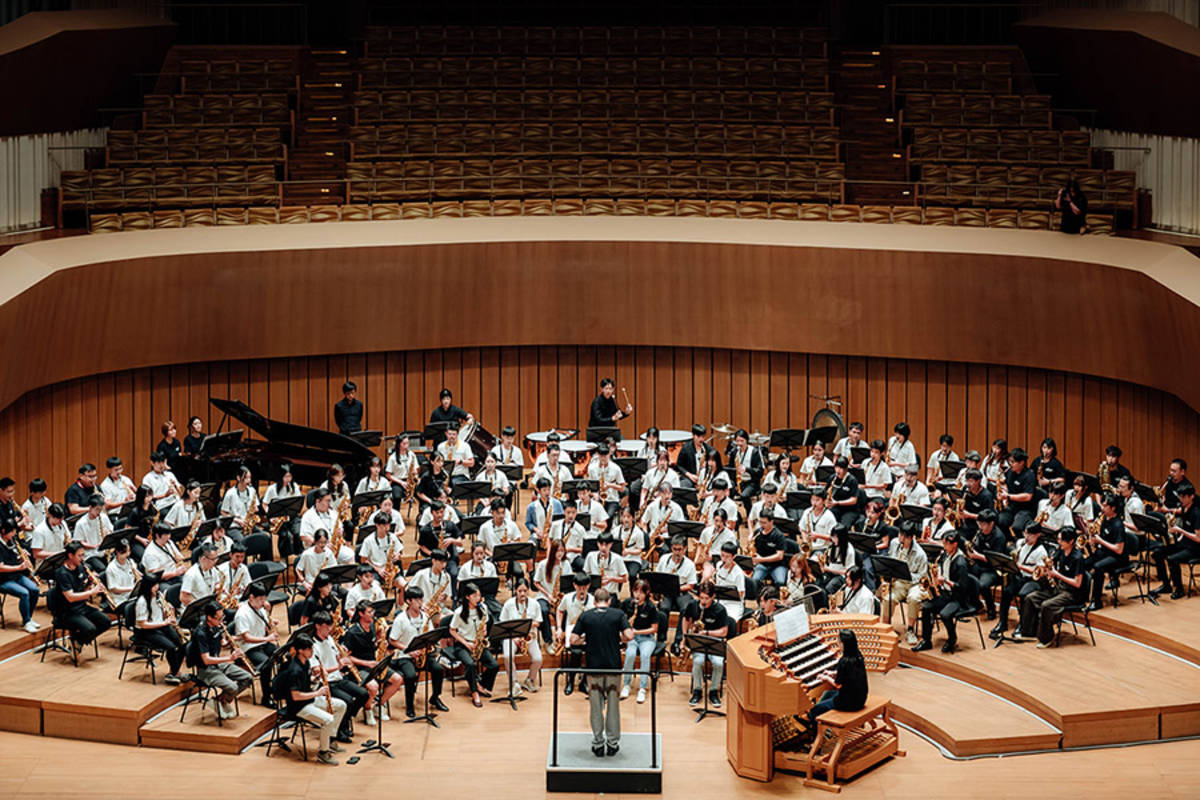 |
▲General rehearsal for the 2025 Weiwuying Music Camp concert, Variations of Ensemble: Pipe Organ Meets Saxophone(Photo courtesy of the National Kaohsiung Center for the Arts (Weiwuying))
CHIEN also has advice for Taiwanese students who are shy or hesitant to ask questions: "Leave your shyness in the practice room and bring your courage to the classroom or onto the stage." He jokes, "It's like asking someone out. You have to be brave enough to take the first step and say, ‘I really like you!' before anything can happen."
Organ, Brass, and Percussion: A Match Made in Sound
After last year's first collaboration between the pipe organ and saxophone ensemble, this year the organ will join the brass and percussion courses and performances. LIU Hsin-hung sees the combination as a natural acoustic match.
"Only brass—with its grandeur, tremendous volume, and full-bodied sound—can achieve a perfect balance with the tremendous sonic power of the pipe organ," says LIU. Most people think of the pipe organ as playing solemn solo music or choral accompaniment in a church. LIU explains that the organ actually has an exceptionally broad range of pitch, volume, and spatial effect. At its softest, it can be almost inaudible, but at full power, it can sound as big as an entire symphony orchestra.
"If the organ is played with just strings or woodwinds, without the support of a full orchestra, their delicate timbres can easily be overwhelmed by the organ. Brass instruments, on the other hand, match the organ in volume, projection, and tonal richness, so together they create a balanced and layered sound. When these two meet in a concert hall, it can be a truly exciting combination."
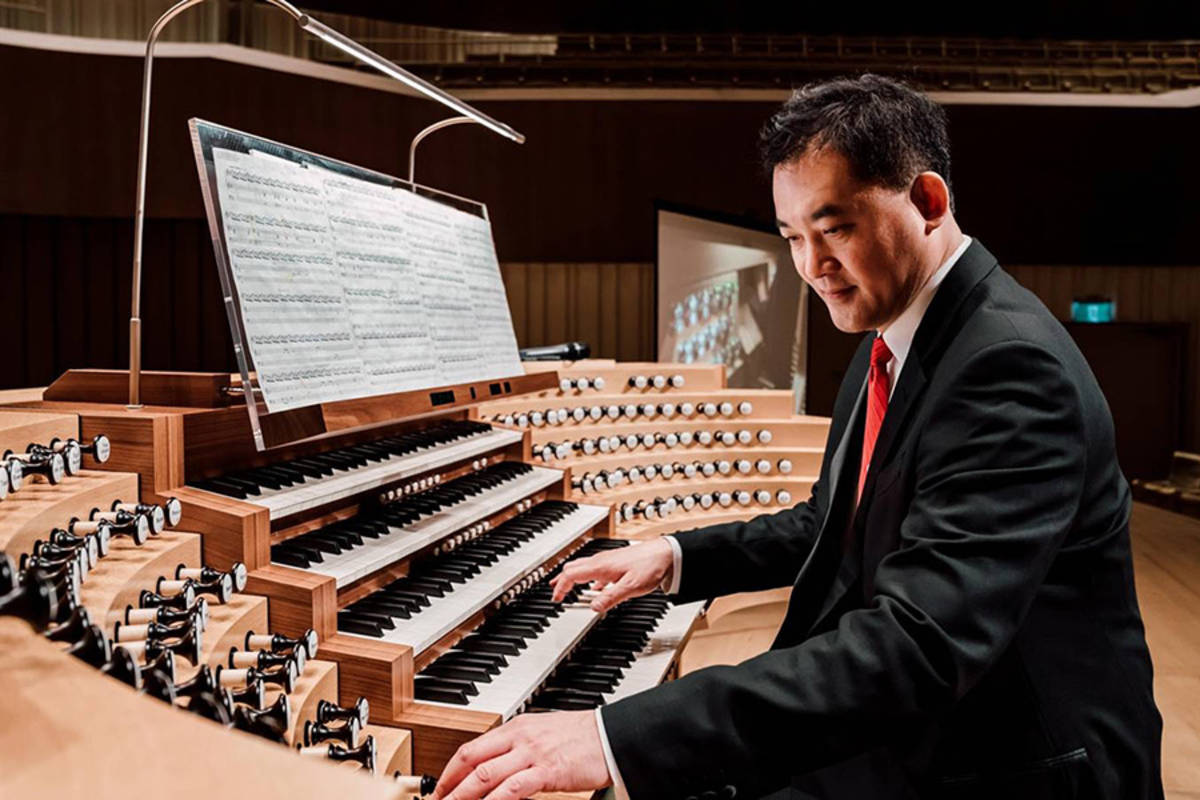 |
▲Organist LIU Hsin-hung(Photo courtesy of the National Kaohsiung Center for the Arts (Weiwuying))
This year, French organist Pierre MÉA has been invited to join the faculty. MÉA is currently titular organist of Reims Cathedral and previously served as a substitute organist at Notre-Dame de Paris for more than a decade. LIU notes that MÉA studied with Olivier LATRY, titular organist of Notre-Dame de Paris, who will visit Taiwan this October. This teacher–student connection extending from Notre-Dame de Paris to Weiwuying gives this year's exchange particular significance.
Speaking about French organ culture, LIU points to differences in the aesthetics of organ sound from country to country: Germany carries on the Baroque polyphonic tradition associated with BACH; the United States tends toward a large-scale modern symphonic style; while France developed a Romantic tradition known for its rich tone and symphonic character.
Historic churches in France can have reverberation times of seven or eight seconds, very different from the roughly two-second reverberation found in many urban spaces in Taiwan. "They think about how sound travels and unfolds in a space in a totally different way," LIU says. What MÉA brings, therefore, is not merely skill but a valuable opportunity for participants to experience how sound can breathe within a vast acoustic space.
Beyond Listening: The Need for Trust
Weiwuying's pipe organ is enormous, with five manuals and more than 9,000 pipes, and is one of the largest in Asia. How can an international organist get used to such a big instrument in a short period of time?
As an organist and the Pipe Organ Technical Consultant for this year's camp, LIU Hsin-hung handles this kind of behind-the-scenes work. "Just as a pianist learns the personality of a piano, an organist first has to get to know the organ," he says. The first thing an organist does upon arriving at a new venue is not to practice, but to study the stop list. One of LIU's key responsibilities is to help performers become familiar with the control interface and save their registrations, allowing them to get up to speed quickly.
The ultimate challenge of this project, however, is not the organ itself but how to bring it together with a brass and percussion ensemble of nearly 100 players. The Weiwuying organ console sits high behind the stage, about eighteen to twenty meters from the center stage. Since sound takes time to travel through the air, a degree of acoustic latency is unavoidable. "The players may see that the organist's hands have already pressed the keys, but the sound only reaches them a moment later." For European organists accustomed to the reverberation of large cathedrals, this is part of everyday experience. For Taiwanese brass players working with a large pipe organ for the first time, however, it can be an eye-opening lesson.
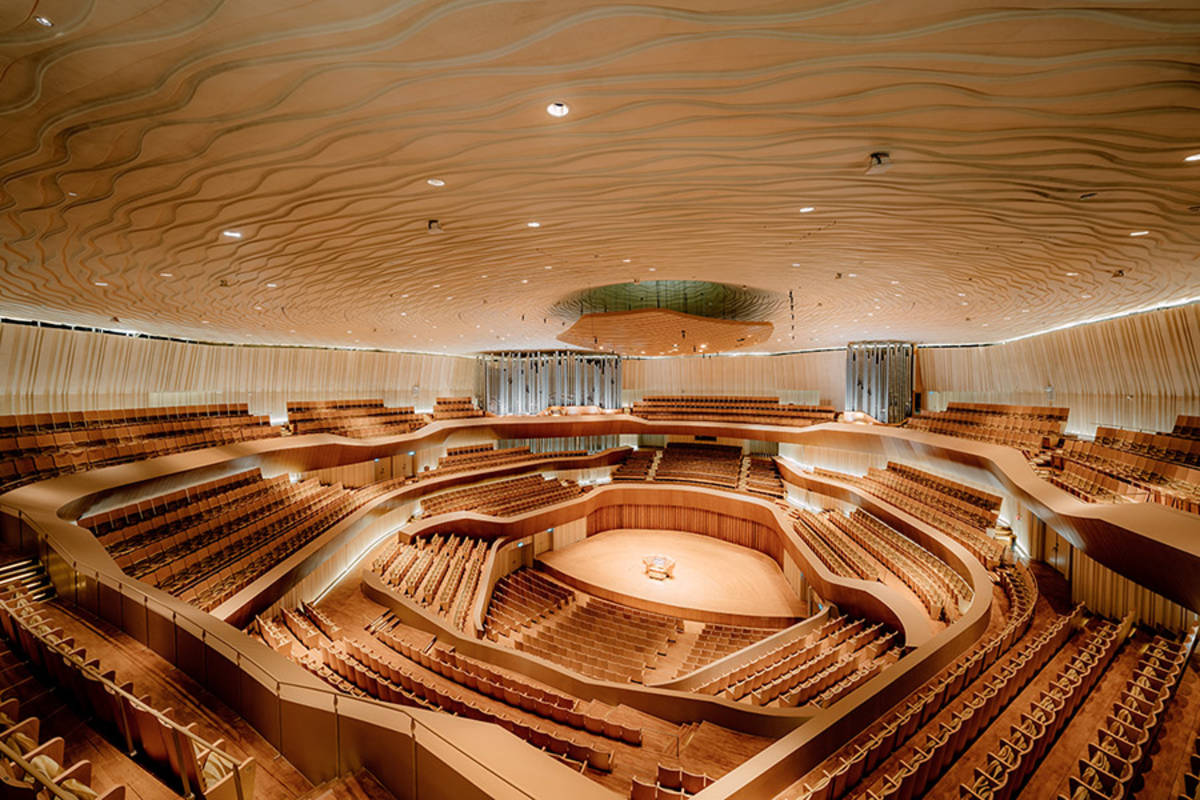 |
▲Weiwuying Concert Hall(Photographer: LIN Chun-Yung, Photo courtesy of the National Kaohsiung Center for the Arts (Weiwuying))
When dealing with acoustic latency, the solution is not to listen harder, but to trust the conductor. LIU explains that as long as the brass players follow the conductor's beat steadily and are not distracted by the delayed sound, the ensemble can remain synchronized. "Sometimes, you actually have to learn not to trust your ears entirely," LIU says. This kind of real-world training is extremely difficult to acquire in an ordinary classroom. It's a lesson you can only learn by actually standing on this stage.
For the four Taiwanese organ students embarking on this journey this year, LIU offers his most direct advice: "Use it as much as you can and enjoy the instrument! Enjoy the sound of Weiwuying. Enjoy what it feels like to play such a large organ with your own two hands. This is truly a rare opportunity." He also encourages them: "Organists may often perform as soloists, but making music is rarely something one person can accomplish alone. Get to know different musicians and become friends with the master musicians and teachers—we are all part of the same musical community. In the future, share the art you have learned with others. If you can make other people happier, you will be happier too."
This idea is also aligned with the original vision that has guided CHIEN Wen-pin in leading this project over the years. As Weiwuying approaches its eighth anniversary, the broader environment continues to change, but CHIEN stresses that Weiwuying's core mission has always stayed the same:
"It is about allowing everyone to share and appreciate music together, and to enjoy the pleasure of performing together. That is the most meaningful thing we want to bring to audiences in Taiwan."
When a brass ensemble of nearly 100 players, the pipe organ, and musicians and participants from different backgrounds all make music together on the same stage, perhaps what matters most is not which note rings the loudest, but that everyone, after listening to one another, helps turn music into something truly made together.
Top Hash Tags
You May Also Like
Dreaming is desired - The German Opera on the Rhine gives a guest performance of Wagner's "Lohengrin" in Taiwan
The banyan tree has great symbolic power in Taiwan. Its broad canopy provides shadow from the subtropical sun, protection against heavy downpours in the afternoon, and space for chess players, or groups having a picnic. In Kaohsiung, third largest city of the country with a population of 2.7 million inhabitants, it also grows on the premises of Weiwuying, formerly a military area not far from downtown.

"When the Music Starts, Childhood Memories Return" — Interview with Choreographer YEH Ming-hwa
The trilogy ballet concert Into the Fantasy of Nutcracker began in 2023 and will come to a close this year after what has been a mission impossible.